
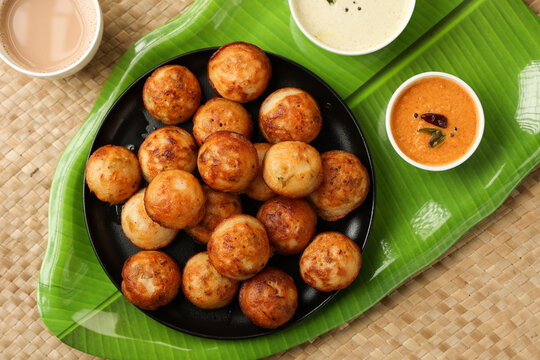
Gunta Ponganalu (also known as Gunta Ponganalu, Gunta Punugulu, Kuzhi Paniyaram, Paddu, or Appe in different South Indian regions) is a popular traditional savory snack and breakfast dish from Andhra Pradesh (especially Coastal Andhra) and other parts of South India.
It consists of small, round, crispy-on-the-outside and soft-on-the-inside dumplings made from fermented idli/dosa batter (prepared from rice and urad dal/black lentils). The batter is often seasoned with finely chopped onions, green chilies, ginger, curry leaves, coriander, and sometimes grated veggies or coconut. It’s cooked in a special gunta ponganalu pan (also called appe pan or paniyaram pan) with very little oil, giving it a golden, dome-shaped appearance.
This dish is a great way to use leftover idli or dosa batter, making it quick, economical, and versatile. It’s commonly served with coconut chutney, tomato chutney, peanut chutney, or sambar.
Advantages and Health Benefits of Gunta Ponganalu
Gunta Ponganalu stands out as a relatively healthier South Indian snack compared to deep-fried alternatives like vadas or bondas. Here are the key advantages:
- Low in oil / Less greasy — Cooked with minimal oil (often just a few drops per batch), it avoids the high calories and fats from deep-frying, making it lighter and better for weight management.
- Fermented batter benefits — The natural fermentation process (from idli/dosa batter) makes it gut-friendly. It improves digestion, enhances nutrient absorption, and supports better gut health due to probiotics.
- Good source of protein — Urad dal in the batter provides decent plant-based protein, which helps with muscle repair, satiety, and overall nutrition.
- Rich in complex carbohydrates and fiber — From rice (and optional additions like millets), it offers sustained energy without sharp blood sugar spikes. When made with millets (like ragi, little millet, jowar, etc.), the fiber content increases further, aiding digestion and preventing constipation.
- Low glycemic index (GI) potential — Especially when millet variations are used, it becomes more diabetes-friendly and helps in better blood sugar control compared to refined flour snacks.
- Nutrient-packed with additions — Onions, green chilies, ginger, curry leaves, and veggies add vitamins (like vitamin C, B vitamins), antioxidants, iron, magnesium, and anti-inflammatory properties.
- Versatile and kid-friendly — Easy to customize (add veggies for extra nutrition), portable for lunchboxes or snacks, and appealing with its crispy-soft texture.
- Gluten-free by nature — Made from rice and lentils (no wheat), it’s suitable for gluten-sensitive people.
- Cultural and practical — Traditional, tasty comfort food that’s quick to prepare, reduces food waste (uses leftovers), and provides a balanced, wholesome option for breakfast, tiffin, or evening snack.
Overall, gunta ponganalu is a smart, tasty choice that combines South Indian tradition with solid nutritional perks—especially when you experiment with millet-based batters for even more health boosts! If you’re in Hyderabad, many local spots and health cafes serve millet versions as a wholesome option.